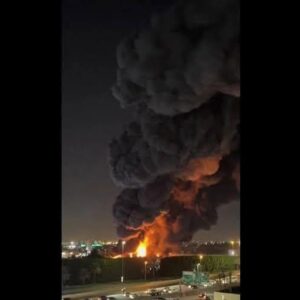
The United States Senate has become the stage for a tense constitutional confrontation, sparked by a high-stakes military operation in Venezuela that has tested the limits of executive authority. After U.S. forces executed a daring overnight raid to capture Nicolás Maduro, the nation now grapples with the legal, ethical, and geopolitical consequences of the mission. Initially framed by the Trump administration as a precise law-enforcement action, the operation has evolved into a profound debate over presidential war powers, congressional oversight, and what constitutes “hostilities” in an era defined by rapid global interventions and precision strikes.
While the operation itself demonstrated remarkable military sophistication, the political and constitutional fallout has been equally dramatic, highlighting the enduring tension between the executive branch’s claim to unilateral authority and Congress’s constitutional prerogative to declare or authorize acts of war.
The Raid That Shocked the World
The raid, executed in early January, involved elite U.S. units striking in Caracas under the cover of darkness. Nicolás Maduro and his wife were detained and transferred to New York to face longstanding narcotics and corruption charges. On the surface, the administration framed this as the capture of a criminal. Yet, critics quickly pointed out that the scale of the operation—with advanced aircraft, special operations forces, and a clear violation of Venezuelan sovereignty—resembled a military campaign more than a law-enforcement action.
Experts in international law noted that removing a sitting head of state without the approval of the UN Security Council or regional allies sets a controversial precedent. By labeling it a criminal apprehension, the administration navigated legal gray areas, but the political optics suggested an unprecedented exercise of executive power. Domestically, it quickly became a lightning rod for debate: was this an extraordinary measure to enforce justice, or an unauthorized act of war?
The operation also highlighted the capabilities of U.S. special forces, who executed the mission with surgical precision. Surveillance drones, stealth aircraft, and rapid extraction teams ensured minimal collateral damage and a swift outcome. No American troops remained in Venezuela following the raid, reinforcing the administration’s claim that it was limited in scope. Yet the very notion of unilateral intervention against a sovereign nation, no matter the target’s criminal status, drew sharp criticism from Congress and legal scholars alike.
The Senate Confrontation
Tensions came to a head in the Senate with the introduction of a War Powers Resolution, spearheaded by a bipartisan coalition of lawmakers including Senators Tim Kaine and Rand Paul. The resolution sought to require explicit congressional approval for any further U.S. military engagement in Venezuela, reflecting concerns that the Maduro raid may have crossed the line from law enforcement into armed conflict.
Debate on the Senate floor was intense. Senator Paul argued that forcibly removing a foreign head of state, regardless of criminal charges, inherently constitutes an act of war. Senator Kaine echoed this sentiment, noting that calling the raid “law enforcement” ignored the geopolitical stakes and the violation of international norms. Other senators countered that the president retains broad discretion to act against threats to U.S. security and that Maduro’s indictment for narcotics trafficking justified swift action.
The confrontation reached its apex on January 14, when the Senate voted on the resolution. Initially, a slim majority seemed poised to support congressional oversight, but under significant White House pressure, several Republican senators switched their positions. The vote ended in a 50-50 tie, allowing Vice President J.D. Vance to cast the deciding vote to block the resolution. While this preserved the administration’s ability to act unilaterally, the narrow margin revealed deep fractures between the executive branch and Congress.
Legal and Constitutional Debate
At the heart of the controversy is the question of presidential authority under the Constitution. The War Powers Clause grants Congress the exclusive power to declare war, but successive presidents have argued for inherent authority to conduct military operations in the interest of national security. The Maduro raid epitomizes this tension.
Supporters of the operation argue that it does not constitute an act of war. They point out that no U.S. troops remain deployed in Venezuela, and that the War Powers Resolution applies only to sustained hostilities, not discrete law-enforcement operations. According to this view, Maduro’s status as a narcotics trafficker and threat to regional stability warranted immediate action. Delaying for congressional approval could have compromised operational success and allowed the target to evade capture.
Critics, however, see the raid as part of a troubling trend toward executive overreach. By unilaterally apprehending a sitting head of state on foreign soil, the administration bypassed the traditional checks and balances envisioned by the framers of the Constitution. Legal experts warn that precedent-setting operations like this could erode congressional authority and undermine the delicate balance of power between the legislative and executive branches.
The debate also touches on the interpretation of the War Powers Resolution itself. Passed in 1973 in response to the Vietnam War, the law requires the president to seek congressional authorization for armed conflicts lasting longer than 60 days. However, successive administrations have challenged its applicability, arguing that the law infringes on the president’s constitutional role as commander-in-chief. The Maduro operation tests these limits in an era of precision raids and short-duration interventions, forcing lawmakers and legal scholars to reconsider the resolution’s relevance.
International Ramifications
The Maduro operation reverberated well beyond U.S. borders. Legal scholars warned that seizing a sitting head of state without UN approval risks destabilizing global norms on the use of force. Diplomats expressed concern that the “New York extraction” model could inspire other countries to conduct similar cross-border operations under the guise of justice, eroding international stability.
In Latin America, reactions were polarized. Protests erupted outside U.S. embassies, reflecting public disapproval and fears of American interventionism. Regional allies expressed unease over the precedent of unilateral action, particularly in countries with fragile political institutions. Within Venezuela, the political landscape is shifting rapidly. CIA Director John Ratcliffe’s visit to Caracas to meet acting President Delcy Rodríguez indicated U.S. efforts to stabilize the interim government and prevent chaos following Maduro’s removal.
Symbolic gestures further highlighted the ideological tensions. President Trump received Nobel laureate María Corina Machado at the White House to thank him for Maduro’s removal, framing the operation as a victory for liberty and democracy. Critics, however, viewed the meeting as a politically charged spectacle that underscored the administration’s tendency to blend unilateral military action with domestic political theatrics.
Historical Context and Comparisons
The Maduro raid echoes past operations in which U.S. presidents have tested the boundaries of their war powers. Historical examples include:
The 1980 rescue mission in Iran, where President Jimmy Carter authorized a failed attempt to free hostages, raising questions about congressional oversight and executive discretion.
The 2011 operation in Libya, when President Obama conducted targeted airstrikes against Muammar Gaddafi’s regime without explicit congressional approval, sparking debates over the limits of unilateral action.
The 2019 raid in Syria targeting ISIS leadership, which involved special forces and limited engagement but ignited legal discussions about presidential authority.
These precedents illustrate the recurring tension between operational necessity, legal authority, and the constitutional requirement for checks and balances. Each case challenges lawmakers and legal scholars to reconcile the demands of modern warfare with the foundational principles of American governance.
Domestic Political Impact
Within the U.S., the operation has intensified partisan and ideological divisions. Supporters celebrate the capture as a decisive blow against a criminal and a signal of U.S. resolve in Latin America. Opponents argue that the unilateral action erodes democratic norms and sets a dangerous precedent for future presidents.
The Senate’s 50-50 tie vote highlighted the deep political stakes. Even among lawmakers who supported the president’s goals, concern over congressional prerogatives and international legal norms influenced debate. Some moderate senators expressed discomfort with the optics of a high-profile raid being used to advance domestic political narratives, while hawkish voices emphasized the operational success and potential deterrent effect on other international criminals.
Public opinion is similarly divided. Polling indicates that while many Americans support the apprehension of a known narcotics trafficker, fewer endorse unilateral military operations against a sovereign nation without congressional oversight. This split reflects broader societal questions about the appropriate scope of executive power in foreign affairs and military operations.
Geopolitical and Regional Considerations
The raid’s consequences extend beyond the immediate U.S.-Venezuela context. Latin American nations are closely observing the operation, wary of potential precedents for cross-border interventions. Governments in the region are reassessing security protocols, diplomatic strategies, and contingency planning to avoid similar unilateral actions in their territories.
International organizations, including the Organization of American States (OAS) and the United Nations, have signaled concern about the legality of extraterritorial arrests of political leaders. While the administration argued that Maduro’s criminal activities justified the operation, critics stress that such actions undermine international norms and could invite retaliatory measures in the future.
The Path Forward: Legal Challenges and Oversight
As the immediate crisis fades, the broader constitutional debate continues. House members are drafting their own versions of the War Powers Resolution to assert legislative authority over potential future interventions. Legal challenges may eventually reach the Supreme Court, testing the boundaries of presidential law-enforcement powers versus war powers in the modern era.
The central question remains: if a U.S. president can apprehend a foreign leader without consulting Congress, what becomes of the traditional balance of powers? The case forces lawmakers, courts, and the public to consider how precision raids, cross-border operations, and unilateral executive decisions fit within the constitutional framework.
Scholars warn that the Maduro raid may serve as a blueprint for future administrations seeking to act decisively abroad without legislative approval. This potential shift raises profound questions about the role of checks and balances in an era of rapid military technology, intelligence capabilities, and global interconnectedness.
Conclusion: A Pivotal Moment in U.S. Governance
The Maduro operation represents more than a tactical military success; it marks a defining moment in U.S. foreign policy and constitutional law. The raid forces a national reckoning over presidential authority, congressional oversight, and the delicate balance between expediency and legality in foreign interventions.
While the raid may have removed a dangerous criminal from power, it has also placed the Senate and broader legislative institutions on the defensive, striving to maintain relevance amid increasing executive dominance. The operation underscores a critical truth: military victories can have lasting political and constitutional consequences that reverberate far beyond the battlefield.
The Senate’s ongoing debates, the potential for legal challenges, and the international reactions all signal that the Maduro operation is not merely about Venezuela. It is about the evolving contours of American governance, the limits of concentrated power in the Oval Office, and the enduring question of how democracy reconciles executive authority with legal accountability.
As the nation continues to grapple with these issues, the Maduro raid will remain a case study in the complex intersection of law, power, and foreign policy—an event whose consequences will shape U.S. governance and international norms for years to come.