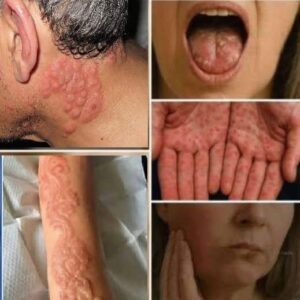
Sleeping with bed bugs can have consequences, but those consequences are not the same for everyone. Human responses to bed bug exposure exist on a wide spectrum, ranging from no visible reaction at all to highly dramatic skin inflammation. While many people experience only small, itchy bites—or remain completely unaware they’ve been bitten—a minority of individuals can develop widespread, intense skin reactions that appear alarming and sometimes painful. These reactions can involve large areas of the body and may look far more severe than what people typically associate with insect bites.
Understanding why this happens requires examining three key factors: how bed bugs feed, how the immune system reacts to their saliva, and why certain immune systems respond far more aggressively than others.
This type of extensive rash is real, medically recognized, and documented, but it is not the typical or expected outcome of bed bug exposure. It does not occur simply because someone slept in an infested bed once or twice. Instead, it arises under specific biological conditions related to immune sensitivity and repeated exposure over time.
What Bed Bugs Do to the Human Body
Bed bugs are nocturnal insects that feed exclusively on blood. They do not chew the skin, burrow into it, or live on the body. Their interaction with humans is brief and indirect.
During feeding, a bed bug:
Pierces the skin with a fine mouthpart
Injects saliva into the skin
Draws blood for several minutes
Retreats back into hiding
The saliva contains substances that:
Prevent blood clotting
Temporarily numb the skin
Allow feeding without immediate pain or awareness
Because of these anesthetic components, most people do not feel the bite when it happens. The reaction occurs later, after the immune system detects the saliva proteins as foreign.
The delay between the bite and the reaction is why people often wake up with symptoms that seem to appear “out of nowhere.”
The Normal Reaction to Bed Bug Bites
For the majority of people, bed bug bites cause localized, limited skin responses, including:
Small red bumps
Mild to moderate itching
Clusters or short lines of bites
Irritation confined to exposed skin areas
These reactions are usually:
Temporary
Not medically serious
Self-resolving within days to a couple of weeks
Some individuals experience little to no visible reaction at all, even with repeated exposure. This means that two people sleeping in the same bed can have completely different physical outcomes.
This lack of reaction in many people is one reason infestations can go unnoticed for long periods.
Why a Severe Rash Can Happen in Some People
A widespread, blotchy, intense rash covering a large area of skin is not caused by the physical damage of the bites themselves. Bed bug mouthparts are too small to cause that level of tissue disruption.
Instead, this type of rash results from an exaggerated immune response to the proteins in bed bug saliva.
In a minority of individuals, the immune system:
Identifies the saliva proteins as a significant threat
Activates inflammatory pathways aggressively
Releases large amounts of immune signaling chemicals
This can lead to:
Diffuse skin inflammation
Dilated blood vessels
Widespread redness and warmth
Swelling and discomfort extending beyond bite sites
This response is classified as a hypersensitivity or allergic-type reaction, not simple irritation.
The Role of Sensitization and Repeated Exposure
Severe reactions almost always involve repeated exposure over time, rather than a single night of bites.
The immune system becomes sensitized in stages:
Early exposure may cause little or no reaction
Continued exposure leads to increased immune recognition
Eventually, the immune response becomes amplified
As sensitization progresses, the body reacts more strongly with each exposure. This explains why someone may sleep with bed bugs for weeks without visible issues and then suddenly develop a severe rash.
Importantly, the severity of the rash is not proportional to the number of bites. A person may have relatively few bites but a large inflammatory response.
The determining factor is the intensity of the immune reaction, not the insect activity itself.
Why the Rash Looks So Extensive
When the immune system overreacts, it releases inflammatory mediators that:
Increase blood flow to the skin
Cause blood vessels to widen
Allow immune cells to spread through surrounding tissue
This leads to:
Broad areas of redness
Blotchy or marbled skin appearance
Heat and swelling
Inflammation extending well beyond the original bite locations
As a result, the rash can appear severe and dramatic even when the actual bite marks are small or difficult to see.
Who Is More Likely to Develop a Reaction Like This
People more prone to exaggerated reactions include:
Individuals with allergic tendencies
People with eczema or chronically sensitive skin
Those with autoimmune or inflammatory conditions
Individuals with a history of strong reactions to insect bites
People experiencing significant physiological stress
Even within these groups, such severe reactions remain uncommon.
What This Rash Is NOT
This type of rash is:
Not an infection caused by bed bugs
Not due to insects living under the skin
Not evidence of disease transmission
Not the standard or expected response to bed bug exposure
The primary issue is immune reactivity, not the insect itself.
When This Reaction Becomes Medically Concerning
Medical evaluation is important if the rash is accompanied by:
Fever
Significant or worsening swelling
Pain rather than itching
Rapid progression
Dark or purplish discoloration
Blistering or skin breakdown
Signs of secondary infection
In such cases, treatment may include antihistamines, corticosteroids, or further diagnostic evaluation.
Why Diagnosis Requires More Than Appearance
A rash alone cannot confirm bed bug exposure. Proper assessment relies on:
Environmental findings
Distribution and pattern of skin lesions
Timing of symptom onset
Medical history
Exclusion of other inflammatory or infectious causes
Many skin conditions can produce similar appearances, and visual assessment alone is insufficient.
The Reality of Bed Bug Consequences
The consequences of sleeping with bed bugs vary widely:
Some people notice nothing
Some experience mild itching
A minority develop severe inflammatory reactions
A dramatic rash does not mean bed bugs always cause this outcome. It means that in certain bodies, under certain conditions, they can.
Final Clarification
Can bed bugs cause a rash like this?
Yes—but only in a minority of people, and only through an exaggerated immune response.
For most individuals, bed bug exposure does not result in widespread skin inflammation. When it does occur, it reflects the body’s sensitivity, not the severity of the insect exposure.
Understanding this distinction is essential for accurate dia