A psychic who says he foresaw Covid now claims that 2026 will be a year that “breaks” the world. Not only one country or one leader, he says, but the wider human order itself. The predictions arrive fully formed: earthquakes tearing through familiar holiday regions, a dangerous global storm event, a royal scandal, a mysterious neurological illness, and the public unraveling of a former president. The language is dramatic, the imagery unsettling—and the timing, in an already anxious world, almost guaranteed to land.
The claims come from Nicolas Aujula, who insists he did not seek attention or authority. He describes his experiences as involuntary—visions arriving without warning, blending symbolic imagery with personal mythology. He speaks of past lives and sudden flashes, and of future scenes he believes are no different in origin from those he associates with past global events.
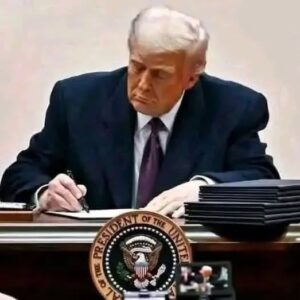
Aujula says these impressions now cast 2026 in dark tones. He describes earthquakes across southern Europe, Turkey, and parts of the Pacific; a storm event he characterizes as unusually destructive; a scandal involving Prince Harry and Meghan Markle that would shift public sympathy; and a symbolic downfall involving Donald Trump, framed as both literal and metaphorical. He also points to a sudden, aneurysm-like illness striking without clear pattern or warning.
Even Aujula concedes uncertainty. He acknowledges that symbols can be misread, that timing is unclear, and that interpretation is imperfect. Yet he remains confident in the broader emotional tone of his message: that the coming period will feel overwhelming, chaotic, and destabilizing.
What matters here is not whether such predictions come true, but how they function. Forecasts like these often mirror the fears already circulating in society—climate anxiety, political exhaustion, institutional mistrust, and a sense that stability is fragile. They give narrative shape to unease, but not necessarily insight.
History offers a quieter lesson. The world has faced years described as “breaking” many times before. Some were marked by disaster, others by resilience that only became visible afterward. Catastrophe is never scheduled by vision alone, and fear rarely predicts outcomes with accuracy.
There is wisdom in discernment. Listening without surrendering judgment. Acknowledging uncertainty without feeding panic. The future will bring difficulty, as it always has—but endurance is not measured by how vividly disaster is imagined, but by how steadily people respond when reality, not prophecy, arrives.
In moments saturated with prediction, clarity is an act of balance. Not denial. Not belief. Just the decision to stay grounded when noise grows loud.