In a dramatic turn marking one of the most severe escalations in Middle East tensions in decades, the United States and Israel launched coordinated airstrikes on Iranian targets early Saturday morning. The operation, dubbed “Operation Epic Fury” by U.S. officials, targeted Islamic Revolutionary Guard Corps (IRGC) command centers, ballistic missile sites, air defense systems, nuclear-related facilities, and key regime infrastructure across provinces including Tehran, Isfahan, Qom, Kermanshah, and Karaj. President Donald Trump described the strikes as necessary to eliminate “imminent threats” from Iran’s nuclear ambitions and proxy networks, while Israeli Prime Minister Benjamin Netanyahu framed them as a preemptive move to neutralize the “existential threat” posed by the Iranian regime.Reports from Israeli sources claimed the strikes may have killed Supreme Leader Ali Khamenei, though Iranian state media countered that he was “safe and sound.” The attacks represent a shift from previous limited exchanges to what analysts describe as regime-change rhetoric, with Trump urging Iranians to “take over your government” and end decades of theocratic rule.
Iran’s response was swift and multifaceted. Within hours, the IRGC launched waves of ballistic missiles and drones targeting Israel directly, as well as U.S. military bases across the region—including Al Udeid in Qatar, Al Dhafra in the UAE, the Fifth Fleet headquarters in Bahrain, Ali Al Salem in Kuwait, and sites in Jordan, Iraq, and Saudi Arabia. Explosions were reported in multiple Gulf capitals, heightening fears of a broader regional war engulfing U.S. allies.
Most alarmingly, Iran’s IRGC Navy escalated by issuing urgent warnings via VHF Channel 16 to commercial vessels in the Persian Gulf. Multiple ships reported receiving explicit broadcasts declaring: “No ship is allowed to pass the Strait of Hormuz,” with messages labeling passage “not allowed,” “unsafe,” or “banned for all ships of any type.” The EU’s Operation Aspides naval mission and UK’s Maritime Trade Operations (UKMTO) confirmed these reports, describing them as the IRGC effectively claiming the strait closed. Iranian state-linked media, including Tasnim News Agency, stated the waterway was “practically closed” due to the “insecure atmosphere” from U.S.-Israeli aggression and Iran’s retaliatory actions.
While Tehran has not issued a formal, nationwide blockade decree—likely to avoid self-inflicted economic damage—the IRGC’s actions have already disrupted maritime traffic. Tanker tracking data from firms like Kpler and Bloomberg show vessels making U-turns, slowing, stopping, or rerouting around the strait. Major oil companies, trading houses, and LNG shippers—including some of the world’s largest—have suspended shipments through the passage. Some owners instructed fleets to avoid Hormuz entirely, while others advised proceeding with extreme caution. The U.S. Navy issued advisories that it could not guarantee commercial vessel safety in the Persian Gulf, prompting widespread hesitation.
The Strait of Hormuz is no ordinary waterway. This narrow chokepoint—only about 21 miles wide at its narrowest—connects the Persian Gulf to the Gulf of Oman and the Arabian Sea. It handles approximately 20-21 million barrels of crude oil and refined products per day, equating to roughly one-fifth of global oil consumption. Significant volumes of liquefied natural gas (LNG) from Qatar also transit here. Key exporters reliant on the strait include Saudi Arabia, Iraq, the UAE, Kuwait, and Qatar. Any sustained disruption would force rerouting around Africa or reliance on limited pipeline alternatives, massively increasing costs and delays.
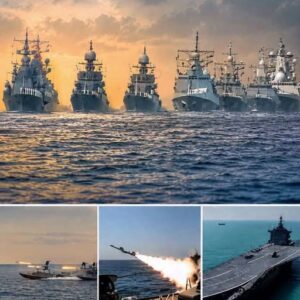
Historically, Iran has repeatedly threatened to close the strait during crises—most notably in 2019 amid U.S. “maximum pressure” sanctions, and again in 2023-2025 amid proxy conflicts—but never fully executed a prolonged shutdown. Partial harassments, seizures of tankers, or mine-laying exercises have occurred, but a complete blockade remains unprecedented. Analysts note Iran’s asymmetric capabilities: swarms of fast-attack boats, anti-ship missiles, naval mines, submarines, and shore-based launchers could impose severe risks without needing a traditional naval dominance. However, U.S. strikes reportedly targeted Iranian naval assets in the Gulf, potentially degrading Tehran’s enforcement ability. Trump has vowed to “obliterate” Iran’s navy if needed, with U.S. Fifth Fleet forces on high alert to escort shipping or forcibly reopen the route.
The immediate market reaction underscores the gravity. Oil markets were closed Saturday (weekend), but Brent crude settled Friday at around $72 per barrel after weeks of risk premiums. Analysts anticipate sharp spikes when trading resumes Sunday evening—potentially $5-20+ per barrel initially, with Barclays forecasting a test of $100 if disruptions persist. In worst-case scenarios involving prolonged closure or attacks on Gulf oil infrastructure, prices could surge to $120-150+ per barrel, per estimates from Kpler, Rapidan Energy, and others. Even partial enforcement—say, 20-30% flow reduction via harassment—could add substantial war-risk premiums.
Such spikes would ripple far beyond energy. U.S. gasoline prices could climb to $4.50-6+ per gallon quickly, fueling inflation and pressuring consumer spending. Globally, higher energy costs would hit transportation, manufacturing, and heating, exacerbating supply-chain strains. Asian importers like China, India, Japan, and South Korea—dependent on Gulf crude—face acute vulnerabilities; India’s refiners, for instance, could see immediate cost surges. Shipping insurance rates have already tripled in some cases, with war-risk premiums soaring. LNG prices could quadruple in spot markets, hitting Europe and Asia hard amid ongoing energy transitions.
Economists warn a sustained Hormuz closure guarantees recessionary pressures: Oxford Economics models modest disruptions pushing Brent to $84, but full blockade scenarios evoke parallels to the 1973 oil embargo or worse. Global growth could stall, stock markets tumble (energy stocks might initially rally, but broader equities suffer), and safe-haven assets like gold and Treasurys surge.
The broader geopolitical context is explosive. This marks the second major U.S. strike on an oil-producing nation in 2026 (following Venezuela operations), but Iran’s strategic position amplifies risks. Iran’s proxies—Houthis in Yemen, Hezbollah, and others—have threatened renewed attacks on shipping and Israel. Gulf states hosting U.S. bases face direct exposure. Diplomatic channels appear frozen; nuclear talks collapsed prior to the strikes.
Tehran views itself on “death ground,” per former NATO assessments, potentially prompting “go big” retaliation: beyond Hormuz, cyberattacks, terrorism against U.S. interests, or strikes on neighbors’ oil facilities. Yet self-preservation tempers action—Iran’s economy relies on oil exports, and full closure invites devastating U.S. counterforce.
As of late February 28, 2026, the strait sees reduced but not zero traffic; some vessels transit cautiously, while others pile up waiting. No confirmed military interdictions or attacks on ships yet, but the psychological effect is profounThe world watches anxiously: will this remain asymmetric harassment, or spiral into open naval confrontation?