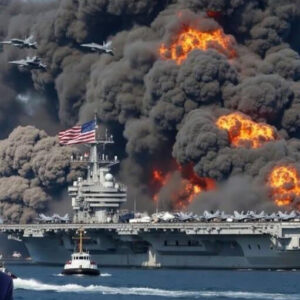
In recent months, tensions across the Middle East have intensified significantly, drawing global attention and raising concerns about the possibility of a broader regional conflict. Statements attributed to political leaders, including Donald Trump, have circulated widely online, fueling speculation, uncertainty, and debate about what may come next.
While some reports and social media posts have made dramatic claims about major military actions and leadership changes within Iran, it is important to approach such information with caution. At the time of writing, many of these claims remain unconfirmed by major international organizations such as the United Nations or widely recognized global news agencies.
The Build-Up of Regional Tensions
The relationship between the United States, Israel, and Iran has been strained for years. Disputes over nuclear development, regional influence, and military activity have contributed to an increasingly fragile geopolitical environment.
In particular, concerns over Iran’s nuclear program have remained a central issue. International bodies like the International Atomic Energy Agency have repeatedly emphasized the importance of transparency, inspections, and diplomatic engagement.
At the same time, Israel has consistently expressed strong opposition to any development that could lead to nuclear weapons capability in the region, citing national security concerns.
Information vs. Misinformation in a Digital Age
One of the defining challenges of modern conflicts—or potential conflicts—is the speed at which information spreads. Social media platforms can amplify breaking news within seconds, but they can also spread misinformation just as quickly.
Unverified claims about large-scale military strikes, leadership casualties, or infrastructure destruction can cause unnecessary panic, disrupt markets, and influence public perception before facts are established.
This is why experts emphasize relying on confirmed reporting and official statements from credible sources.
The Strategic Importance of the Strait of Hormuz
One of the most critical areas frequently mentioned in discussions about Middle East tensions is the Strait of Hormuz. This narrow waterway is one of the most important النفط (oil) transit routes in the world.
Any disruption in this region could have immediate global consequences, including:
Rising fuel prices
Supply chain disruptions
Increased economic uncertainty
Because of its importance, even the threat of instability in this region can impact global markets.
Human Impact: The Cost of Conflict
Regardless of political narratives or strategic objectives, one reality remains constant: conflict carries a heavy human cost.
Civilians are often the most affected, facing displacement, loss of infrastructure, and limited access to healthcare and basic services. International organizations, including the World Health Organization, consistently stress the need to protect civilian populations and maintain access to medical care during crises.
Global Reactions and Diplomatic Pressure
Governments around the world have urged restraint and emphasized the importance of diplomacy. Calls for de-escalation have come from European nations, regional partners, and international institutions.
The United Nations has repeatedly highlighted the importance of dialogue, warning that further escalation could destabilize not only the Middle East but also global security and economic systems.
What Happens Next?
At this stage, the situation remains fluid. Analysts point to several possible paths forward:
Renewed diplomatic negotiations
Continued regional tension without direct conflict
Escalation involving multiple countries
Each scenario carries its own risks and consequences, making careful monitoring and responsible reporting essential.
Final Thoughts
In an era where information spreads instantly, distinguishing between verified facts and speculation has never been more important. Claims involving major geopolitical developments—especially those concerning figures like Donald Trump or nations such as Iran—should always be approached with critical thinking and reliance on credible sources.
The world is watching closely, and while uncertainty remains, one thing is clear: the importance of truth, accuracy, and responsible communication cannot be overstated.