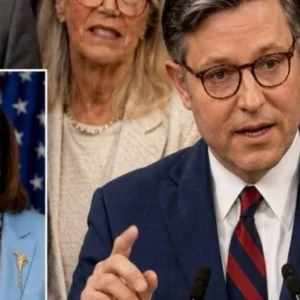
White House Press Secretary Karoline Leavitt discussed media access, press pool policies, and presidential communication during a conversation with Axios co-founder Mike Allen. The discussion focused on how journalists receive opportunities to cover the president, whether changes to traditional press arrangements improve access, and how communication strategies have evolved in the modern media environment.
During the event, Allen raised questions about the Associated Press and its role in documenting major presidential moments. He referred to the photograph of Donald Trump taken by AP photographer Evan Vucci following the assassination attempt in Butler, Pennsylvania, and asked whether changes to press access could affect the historical record of the presidency.
Leavitt responded that the administration viewed its approach as an effort to broaden access rather than restrict it. She argued that a limited number of established news organizations should not automatically receive priority for positions in the White House press briefing room or the rotating group of journalists who accompany the president. According to Leavitt, the administration wanted to create opportunities for a wider range of publications and media organizations.
She explained that thousands of journalists and media outlets hold White House press credentials, while a smaller group regularly covers presidential activities in person. In her view, expanding opportunities for different publications would allow more journalists to participate in covering the administration. She also pointed to Axios as an example of a publication that could benefit from a more inclusive selection process.
Leavitt maintained that the changes had not prevented the public from receiving information about the administration’s work. She said journalists continued to attend briefings, report on presidential activities, and communicate developments to their audiences. Her argument was that a broader range of participating outlets could contribute to the flow of information reaching the public.
Allen then introduced a different perspective by referring to a statement from the White House Correspondents’ Association. The organization had raised concerns about changes affecting the traditional role of wire services in the press pool, emphasizing the importance of independent journalism and questioning whether government officials should determine which media organizations receive particular access.
In response, Leavitt argued that the association’s leadership should not have exclusive authority over decisions about which journalists enter the Oval Office or travel aboard Air Force One. She said the administration wanted to provide opportunities to a wider selection of outlets rather than reserve positions for a small group of established organizations.
Leavitt also rejected the suggestion that the changes were primarily intended to improve coverage of the president. She noted that journalists with differing political perspectives continued to receive opportunities to report on the administration. She described the policy as an effort to increase the variety of participating media organizations, rather than a decision based on political ideology.
The discussion also touched on the changing relationship between presidents and the news media. Leavitt pointed to the role of digital communication and alternative media platforms in modern political campaigns. She argued that the administration’s approach to communication reflected the broader transformation in how Americans receive news, with audiences increasingly accessing information through numerous publications, websites, and digital channels.
The conversation also brought attention to former President Joe Biden’s interactions with reporters. An Axios report titled “Biden’s Media Evasion” examined the number of press conferences and media interviews conducted by Biden compared with those of other recent presidents. The figures cited in the report indicated that Biden had participated in fewer such appearances than several predecessors at comparable points in their presidencies.
The reported comparison placed Biden at 164 appearances, while Donald Trump had recorded 468. George W. Bush and Ronald Reagan were also cited, with 248 and 262 appearances, respectively. These figures became part of the broader discussion about presidential availability, although comparisons can depend on how interviews, news conferences, and other interactions are counted.
Ultimately, the exchange highlighted an ongoing debate about press access, government transparency, and the responsibilities of journalists covering the White House. Leavitt emphasized expanding participation among media organizations, while Allen raised questions about protecting independent reporting and preserving a reliable historical record. The discussion illustrated how traditional press arrangements continue to evolve as presidential communication adapts to a changing media landscape.